
Scar or mark?
Understanding red and brown marks after acne
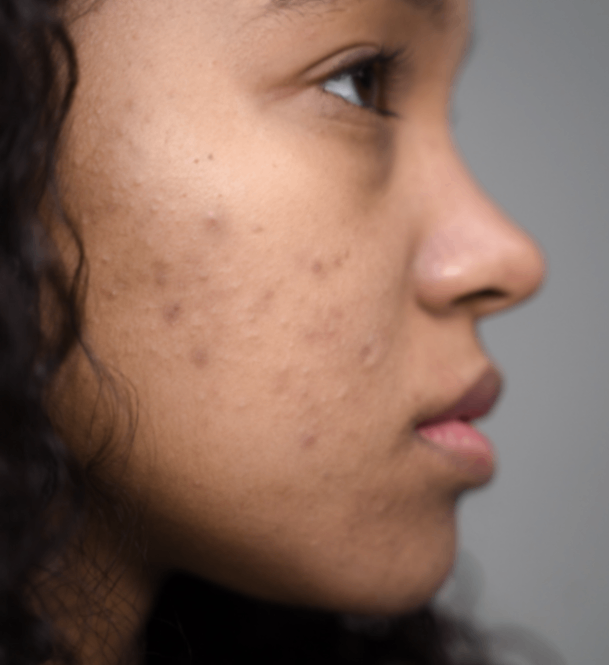
"I've got acne scars" is one of the most common things we hear at consultation. Very often, though, what is bothering someone is not a scar at all. It is a mark: a flat change in colour left behind after a spot has healed.
The difference matters, because marks and scars are treated in different ways, and marks often respond more quickly.
A simple check at home
Stand by a window so that light falls across your face from the side, then run your fingertip gently over the area.
If the skin is flat and only the colour is different, it is most likely a mark.
If you can see or feel a dip or a bump, it is a scar.
Many people have both. That is useful to know, because colour can make texture look worse than it really is.
Red or purple marks
These are known as post-inflammatory erythema. After a spot, small blood vessels in the area can stay dilated, leaving a red, pink or purplish mark that may take months to fade. They tend to be more noticeable on lighter skin tones.
How we treat them: our Dye-VL handpiece uses filtered light that is absorbed by the haemoglobin in blood vessels, helping to reduce the redness. It is a light-based treatment rather than a laser, and it usually involves very little downtime.
Brown marks
These are known as post-inflammatory hyperpigmentation. Inflammation prompts the skin to produce extra melanin, leaving a brown or darker mark. They are more common in medium and darker skin tones, and they can last a long time, particularly with sun exposure.
How we treat them: ClearLift Pro 1064 delivers very short pulses of energy that can help break up excess pigment, with minimal downtime. We usually pair this with a medical-grade skincare plan, as the right products at home make a real difference to brown marks. We choose the approach carefully for your skin tone, because some treatments can trigger new pigmentation if they are not well matched.
When marks and scars sit together
Many people have flat marks sitting on top of textural scars. In these cases, we often treat the colour first or alongside the texture. Reducing redness or brown marks can make scars look less obvious, and it gives a clearer picture of how much textural treatment is really needed.
Preventing new marks
Treat active acne early. Fewer breakouts mean fewer marks and fewer scars.
Try not to pick or squeeze. This increases inflammation and the risk of both marks and scarring.
Wear sunscreen every day. UV exposure can darken brown marks and slow their fading. We stock Heliocare sun protection in clinic.
Seeing beneath the surface
At your consultation, our OBSERV 520x skin analysis system lets us assess your skin in more detail than the naked eye alone. Together with a close look at your skin in good light, this helps us work out what is a mark, what is a scar and what will make the biggest difference first.
Not sure whether you have scars, marks or both? Book a consultation with DG Medical Aesthetics and Skin and we will help you find out, and explain your options clearly.