
Stretch marks
What laser treatment can realistically do
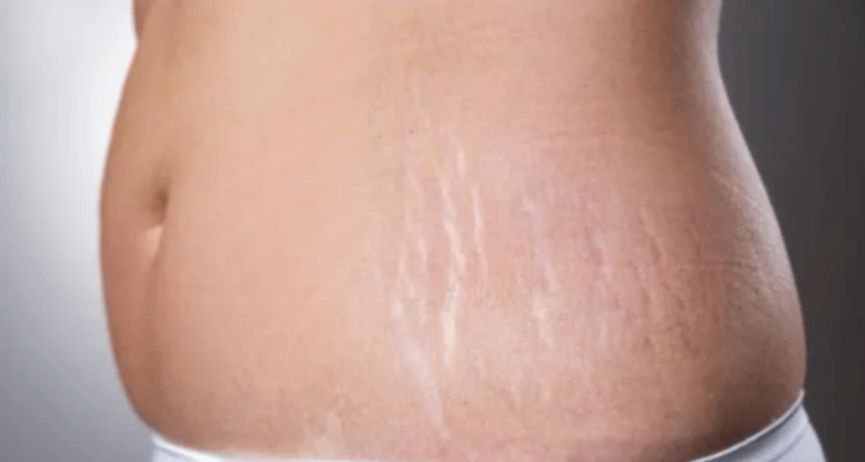
Stretch marks are incredibly common. Pregnancy, growth spurts, weight changes, building muscle and some medicines, such as steroids, can all cause them. They are nothing to be ashamed of, but if yours bother you, there are options worth knowing about.
Stretch marks are a type of scar
Stretch marks, known medically as striae, form when the deeper layer of the skin is stretched faster than it can adapt. Collagen and elastin fibres break down and reorganise, leaving a line of thinner skin. In that sense they behave much like a scar, which is why scar treatments can help.
Red or white? Why it matters
Stretch marks change as they age.
Red, pink or purple stretch marks (striae rubra) are newer. They are often slightly raised and contain more blood vessels.
White or silvery stretch marks (striae alba) are older. They are usually flat or slightly indented, and paler than the surrounding skin.
A comprehensive review of laser and light treatments found that red stretch marks are generally more responsive. White stretch marks can still improve, with fractional lasers showing the strongest results for collagen production in older marks. So if your stretch marks are still red, it can be worth seeking advice sooner rather than later.
How we treat stretch marks
ClearSkin Pro 1540 is a non-ablative fractional laser that remodels the skin beneath the surface with minimal downtime. A review of laser treatment for stretch marks suggested that the 1540 nm non-ablative fractional laser is more likely to be considered a first-line option.
Dye-VL targets the redness in newer stretch marks.
SupErb 2940 may be used for selected, more established marks where stronger resurfacing is needed. Ablative resurfacing carries a greater risk of pigment changes and a longer recovery, so we use it carefully, particularly in darker skin.
Microneedling can also be combined into some treatment plans.
Being realistic
We want you to have honest expectations. Laser treatment can improve the colour, texture and visibility of stretch marks, and research reviews describe moderate improvement, but no treatment reliably makes them disappear. Most people need a course of treatments, and results build gradually over several months.
Areas we commonly treat
The abdomen, hips, thighs, breasts, upper arms and buttocks are the most common areas. Larger areas may take longer per session, and we will talk you through this at your consultation.
Pregnancy and breastfeeding
If you are pregnant or breastfeeding, please let us know when you book, as this will affect the timing of your treatment.
Darker skin tones
In darker skin, stretch marks may appear darker or lighter than the surrounding skin. We take extra care with settings and choose gentler options where appropriate. You can read more in our post on scar treatment for darker skin tones.
Ready to explore your options? Book a consultation with DG Medical Aesthetics and Skin. We will look at the age, colour and texture of your stretch marks and give you an honest view of what treatment could achieve.