
Surgical and injury scars
Why timing matters
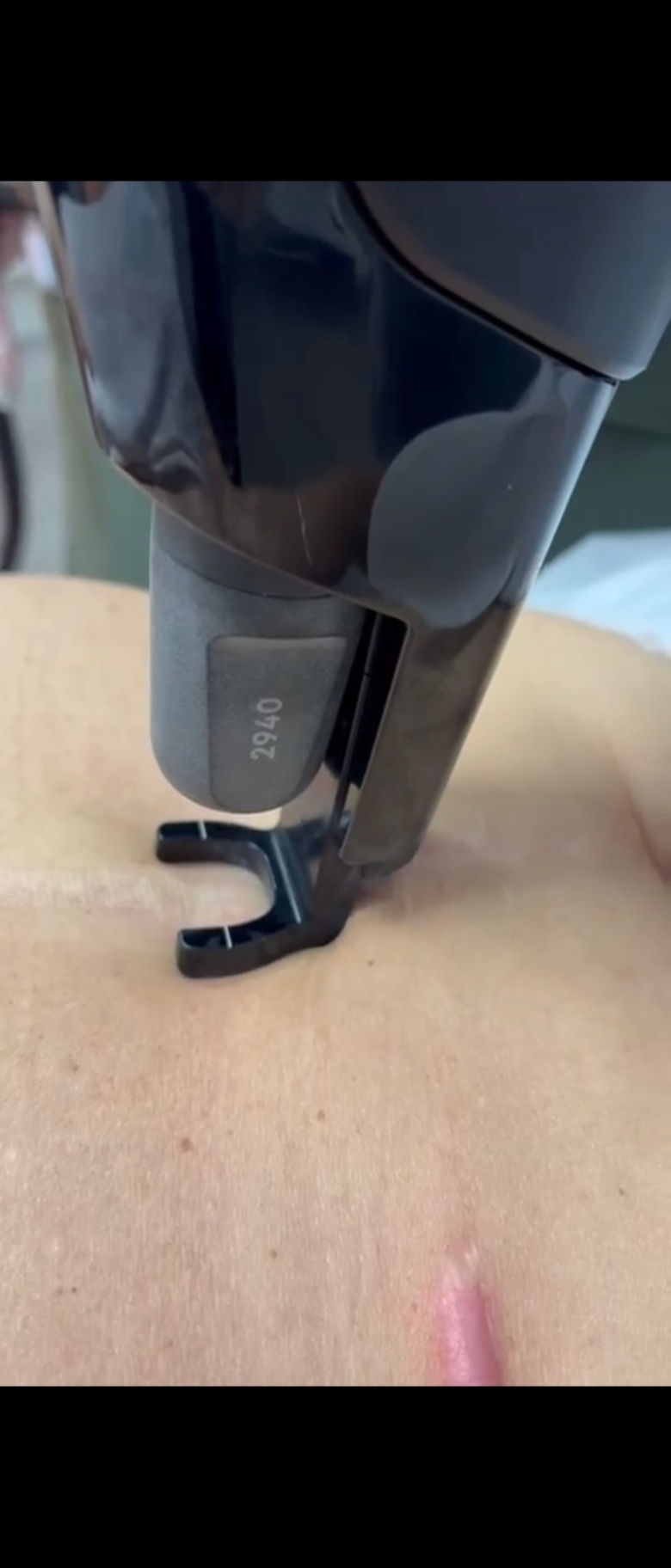
A caesarean section, a mole removal, a facial procedure, a fall or a burn: life leaves marks. Many surgical and injury scars fade well over time, but some stay red, raised, indented, stretched or darker than the surrounding skin. If that is bothering you, you do not have to simply wait and hope.
How a scar changes over time
When a wound first heals, the new scar is usually pink or red and may feel firm or slightly raised. Over the following months it gradually remodels, often becoming flatter and paler. This process can take a year or more.
Some scars settle beautifully. Others stay red, become thickened, or leave a dip or a change in colour.
Why earlier can be better
For a long time, the advice was to wait until a scar had fully matured before treating it. That thinking has shifted. A recent review of the research found that early intervention, especially within weeks to months of a wound healing, appears to benefit many surgical and traumatic scars. Newer, red scars tend to respond particularly well to treatments that target blood vessels.
That does not mean treating an open or healing wound. We only treat once your skin has fully closed and healed, and if you are still under the care of a surgeon, we will ask you to check with them first.
How we treat surgical and injury scars
Dye-VL targets the redness in newer, pink or red scars.
ClearSkin Pro 1540 works beneath the surface to help remodel the scar, with little downtime.
SupErb 2940 resurfaces uneven or indented scars and helps blend the edges into the surrounding skin.
ClearLift Pro 1064 can help with darker pigment around or within a scar.
Many scars benefit from more than one of these, planned as a course.
What about older scars?
Older, mature scars can still be improved. They may need more sessions, and the focus is often on texture and blending rather than redness, but it is rarely too late to explore your options.
Scars we commonly see
Caesarean section and abdominal surgery scars
Scars after mole or lesion removal
Facial and cosmetic surgery scars
Scars from cuts, falls and accidents
Small, fully healed burn scars (extensive burn scars are best managed alongside specialist burns services)
Please tell us if...
your scar has grown beyond the edges of the original wound
you have ever had keloid or very raised scars
your scar is painful or itchy
These can need a different approach, and we will advise you honestly, including referring you on if that is best for you. A scar or mark that is changing, bleeding or getting bigger should always be checked by your GP.
The evidence
In 2020, an international panel of 26 dermatologists and plastic surgeons concluded that lasers are a first-line therapy for traumatic scars and contractures, and that patients without access to them may not be receiving the best available care after injury.
Unhappy with how a scar has healed? Book a consultation with DG Medical Aesthetics and Skin. We will assess your scar, talk through timing and create a plan that suits you.