
Ablative Laser Resurfacing: Turning Back the Clock on Deeper Lines and Texture
There comes a point when skincare, peels and gentler treatments start to reach their limits. Deeper lines around the mouth and eyes, crepey texture, enlarged pores and years of sun damage live in the structure of the skin itself, and improving them means working at that level.
That is where ablative laser resurfacing comes in. It is one of the most powerful non-surgical tools we have for skin renewal. It is also a treatment that demands skill, careful planning and honest conversation about recovery. Here is what you need to know.
Ablative versus non-ablative: what is the difference?
Skin lasers broadly fall into two groups:
Non-ablative lasers heat the deeper layers of the skin to stimulate collagen while leaving the surface intact. Recovery is quicker, but results are more gradual and subtle, and a course of sessions is usually needed.
Ablative lasers remove (vaporise) thin layers of skin as well as heating beneath. The body responds by rebuilding fresh skin and new collagen. Results are more marked, but so is the recovery.
Both can be delivered fractionally, a concept first described in 2004. Instead of treating the entire surface, the laser creates a grid of microscopic treatment columns surrounded by untouched skin. The untreated skin acts as a reservoir for healing, which significantly shortens recovery and lowers the risk of side effects compared with treating the whole surface at once.
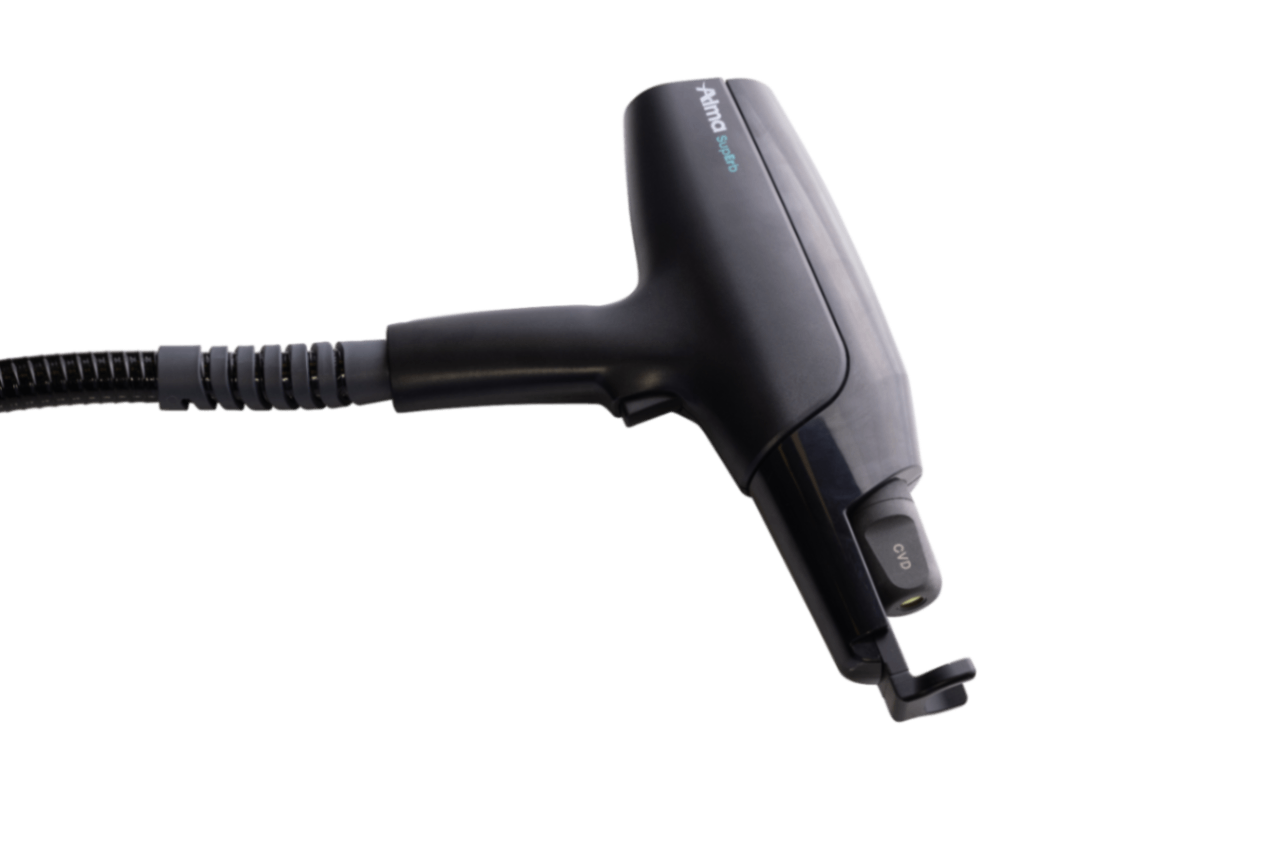
Our ablative laser: the Superb 2940
The Superb 2940 on our Alma Harmony platform is an Er:YAG laser operating at 2940 nm. This wavelength sits at the peak of water absorption in the skin, which means the energy is taken up very efficiently at the surface. The result is precise, controlled removal of tissue with relatively little heat spreading into surrounding skin.
Because we can adjust depth, density and mode (fractional or full-surface), the same handpiece can be tailored from a lighter refresh to a more intensive resurfacing for deeper lines and marked texture.
What does the research say?
Fractional Er:YAG for sun-damaged skin: an early pilot study of Alma's fractional "Pixel" Er:YAG technology treated 28 people with mild to moderate sun damage. At two months after treatment, 75% rated their results as excellent and 25% as good, with side effects limited to redness and mild swelling, and results were maintained at six to nine months.
Er:YAG compared with CO2: CO2 is the other well-known ablative laser. In a randomised split-face trial for acne scarring, fractional Er:YAG and fractional CO2 produced comparable improvement, but Er:YAG was significantly less painful (average pain score 3.5 versus 6.2 out of 10) and was associated with less post-inflammatory hyperpigmentation. Er:YAG is often chosen when the aim is strong results with a more manageable recovery.
The trade-off is real: the published literature consistently shows that more aggressive ablative treatments give more dramatic results but require longer healing, while gentler non-ablative approaches recover faster with less dramatic change. There is no single "best" laser; there is the right laser for your skin, your goals and your lifestyle.
A gentler alternative: ClearSkin Pro
Not everyone wants or needs ablative resurfacing. For those who prefer minimal downtime, our ClearSkin Pro (1540 nm non-ablative fractional laser) can improve texture with 24 to 48 hours of downtime. In a study of 15 people treated monthly for five sessions, skin roughness volume was reduced by 49.5%. We often discuss both options side by side, and sometimes combine them over a treatment plan.
Why ablative resurfacing belongs in medical hands
This is one treatment where the practitioner's clinical knowledge really counts.
Wound care and healing. Ablative laser creates a controlled wound. Understanding how skin heals, recognising early signs of infection and knowing when to act are core nursing skills.
Medical history matters. Some medicines, a history of cold sores, poor healing or a tendency to scar can all affect whether ablative treatment is suitable and how it should be planned. We go through this thoroughly.
Skin type and pigment. Deeper skin tones have a higher risk of post-inflammatory hyperpigmentation after ablative treatment. In the trial above, which was carried out in skin type IV, pigment changes occurred in 35% of Er:YAG-treated sites. Careful selection, conservative settings and skin preparation reduce this risk.
Regulation. At the time of writing, there are no specific legal controls in England on who can offer most non-surgical cosmetic procedures, although the government has announced plans for a licensing scheme. Choosing a CQC-registered, nurse-led clinic gives you an extra layer of reassurance.
What to expect
Consultation: face to face, with OBSERV 520x skin analysis, a full medical history and an honest discussion about downtime.
Preparation: consistent daily SPF and a pre-treatment skincare routine to get your skin in the best condition.
On the day: numbing cream is commonly used before treatment. You will feel heat and a prickling sensation.
Recovery: expect redness, swelling and a feeling similar to sunburn, followed by flaking or light crusting as new skin comes through. The length of recovery depends on the depth of treatment, which we will plan together around your commitments.
Results: skin often looks fresher once it has healed, and collagen continues to remodel for several months, so improvement builds over time.
Aftercare: meticulous sun protection is essential for the months that follow.
Is it right for you?
Ablative resurfacing is a significant treatment, and the right decision starts with an honest conversation. At DG Medical Aesthetics and Skin, we take the time to understand your skin, your goals and your life, and we will only recommend it if it is the right choice for you.
Book a consultation to find out whether resurfacing, or a gentler alternative, is the best next step for your skin.
This article is for general information and does not replace a personal consultation. Results vary between individuals.