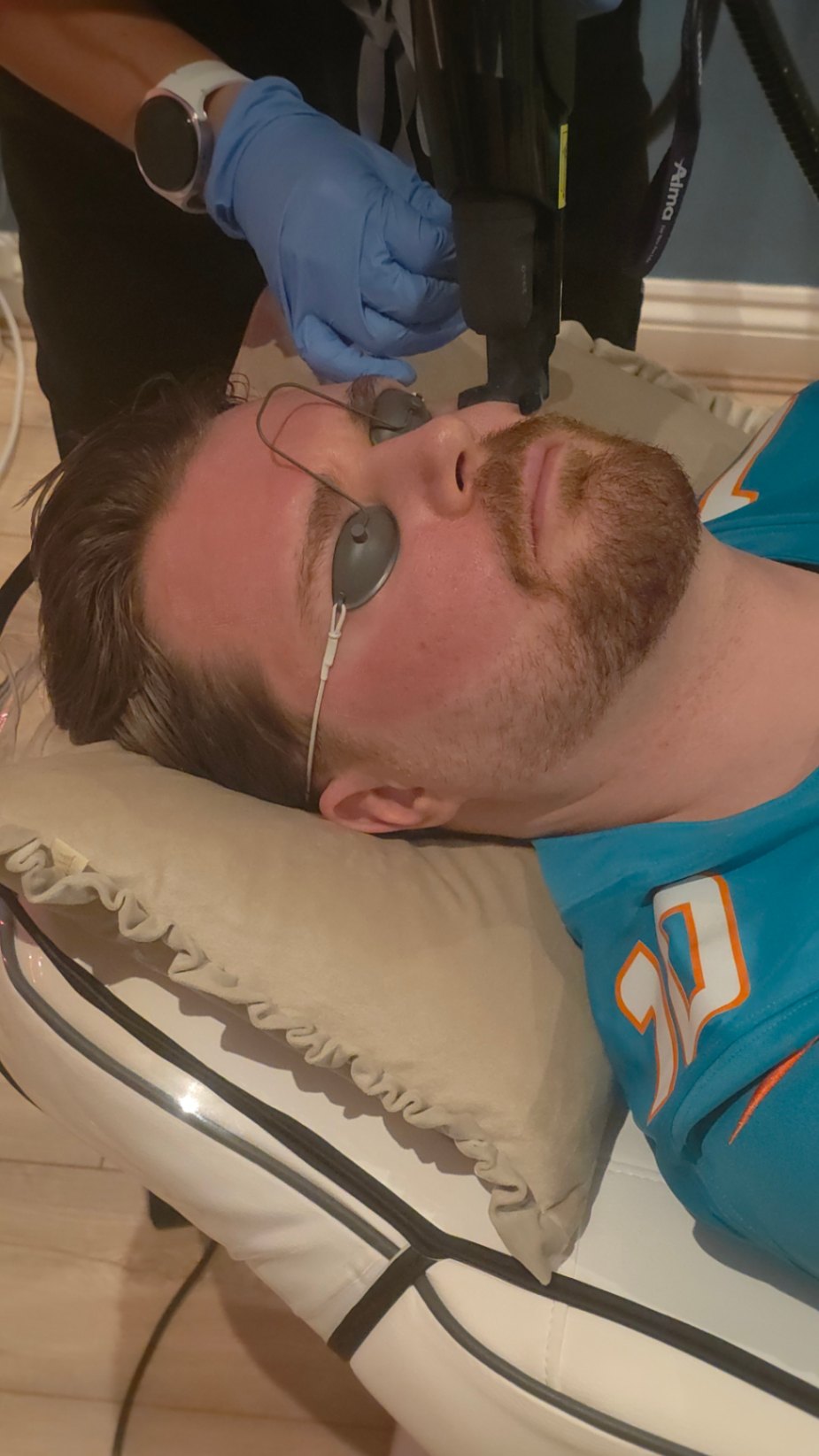
Ablative vs Non-Ablative Lasers; which do I choose?
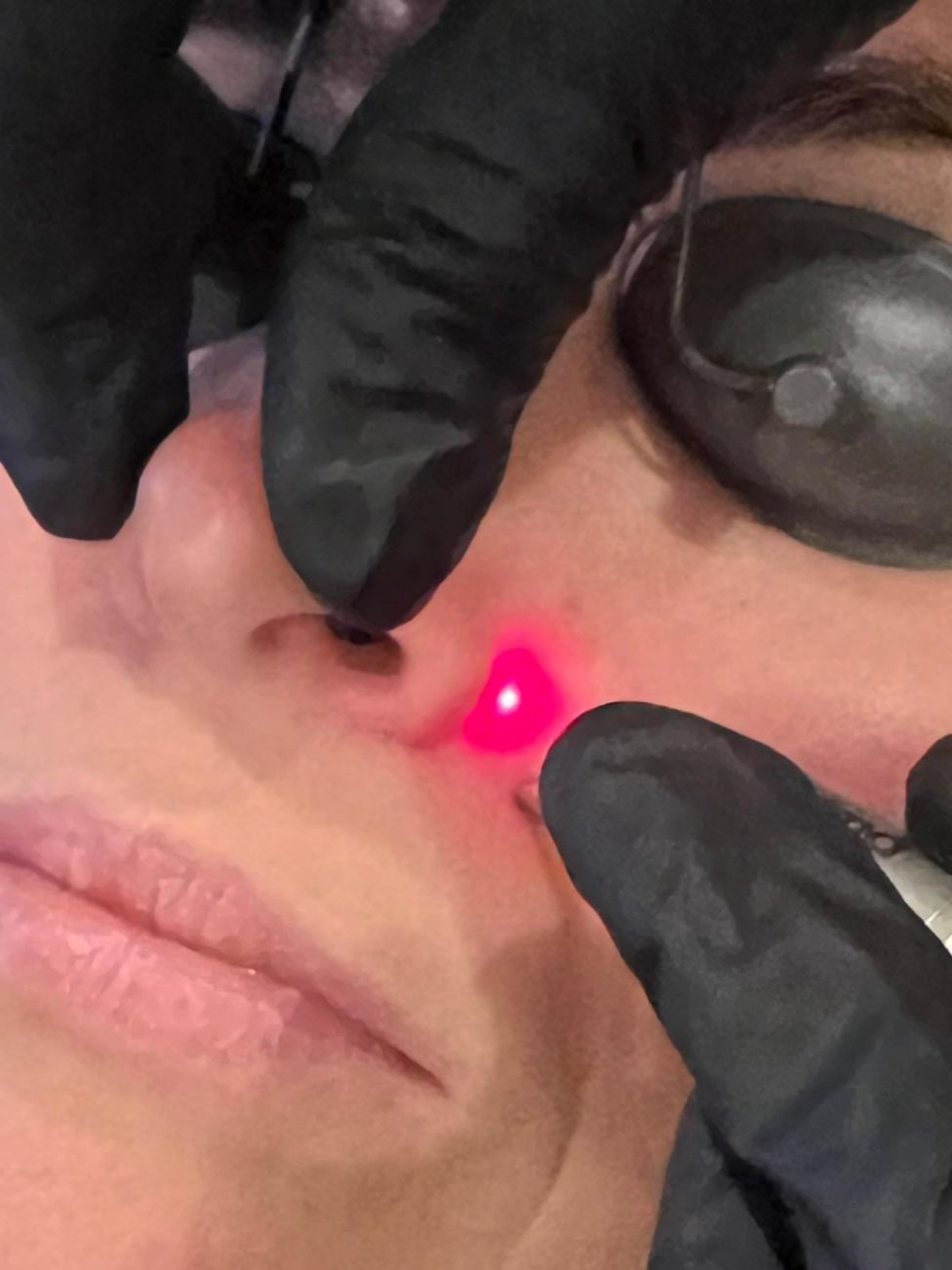
If you have been looking into aesthetic treatments recently, you have likely found yourself tumbling down a rabbit hole of laser terminology. One of the most common comparisons people search for is the difference between ablative and non-ablative lasers.
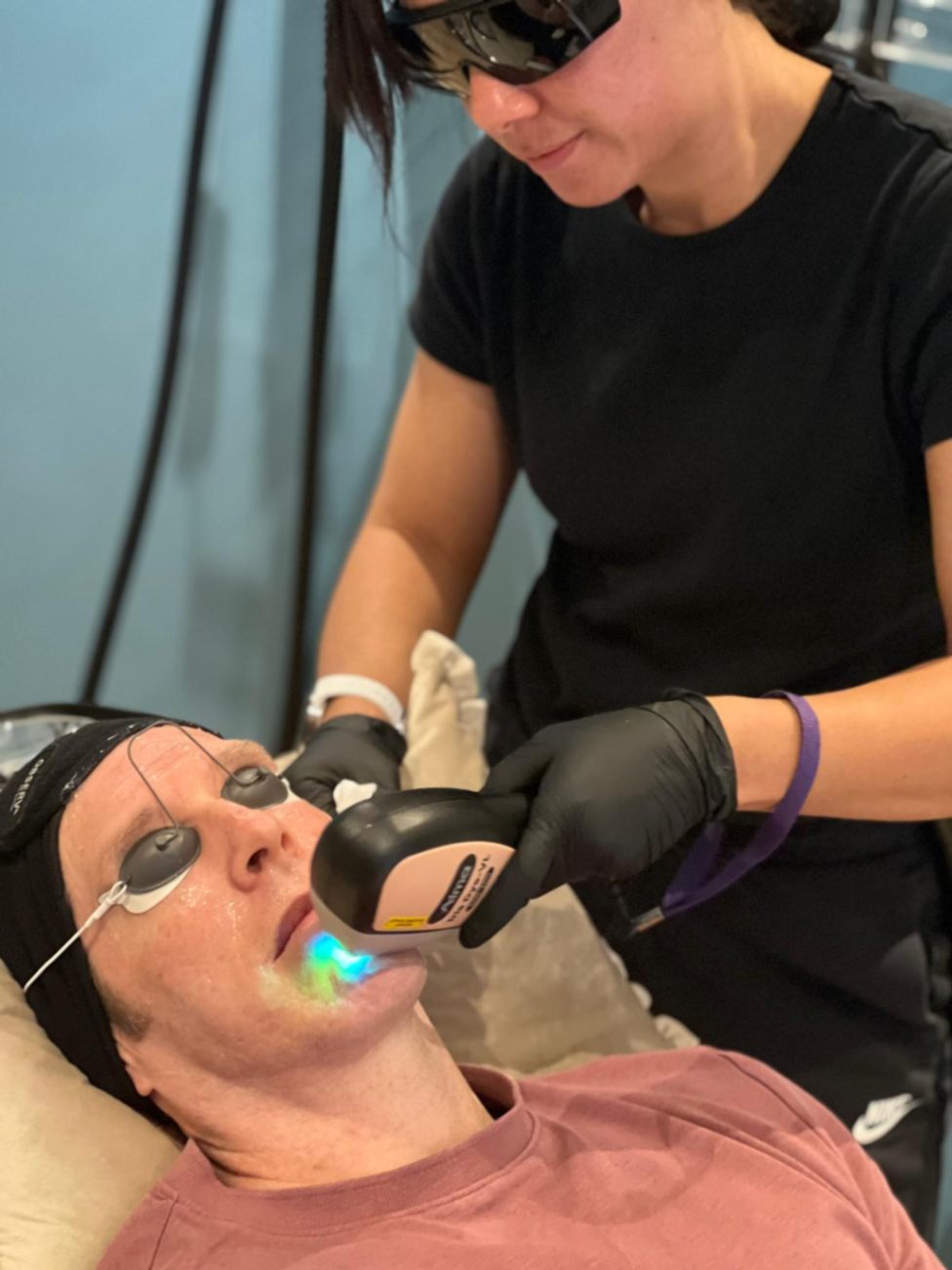
It is easy to feel overwhelmed, but the concepts are actually quite straightforward once you break them down. At our clinic, we use the state-of-the-art Alma Harmony platform, which allows us to offer the absolute best of both worlds.
Here is your complete guide to understanding how these treatments work and which approach might be right for your skin.
The Golden Rule of Lasers: Selective Photothermolysis
Before diving into the specific types of lasers, it helps to understand exactly how they work. The core principle behind all laser and light treatments is a concept called selective photothermolysis.
Think of it as a highly targeted delivery system. "Selective" means we choose a specific wavelength of light. "Photo" refers to the light itself. "Thermo" means heat, and "lysis" means destruction.
We use specific wavelengths of light to seek out specific targets in the skin, known as chromophores. The three main chromophores in aesthetic medicine are:
Water: Found abundantly throughout our skin tissue.
Melanin: The pigment responsible for brown spots, freckles, and hair colour.
Haemoglobin: The red protein in our blood, targeted when treating visible veins and redness.
When the laser hits its specific chromophore, it converts to heat and safely destroys the target while leaving the surrounding skin perfectly intact.
Ablative Lasers: The Resurfacing Powerhouses
Ablative lasers are the heavy lifters of skin rejuvenation. They work by vaporising the very outer layer of the skin (the epidermis) while simultaneously heating the deeper layers (the dermis). This process triggers a profound healing response, forcing your body to create entirely new, fresh skin and a massive surge of collagen.
Our Tool: The 2940 Superb (Erbium:YAG)
On our Alma Harmony system, our ablative option is the highly advanced 2940 Superb handpiece.
Wavelength: 2940 nm.
Target Chromophore: Water.
How it Works: Because human tissue is mostly water, this 2940 nm wavelength is absorbed incredibly efficiently. It allows for highly precise ablation of the superficial skin layers, making it the gold standard for treating deep wrinkles, acne scarring, and significant textural irregularities.
The Experience: You will have some downtime with this treatment, which can be up to 10 days of redness and peeling, but the dramatic, skin-smoothing results are well worth it.
Non-Ablative Lasers: High-Impact Results with Zero Surface Damage
If ablative lasers work from the outside in, non-ablative lasers work from the inside out. Do not let the lack of surface damage fool you; these are highly effective, powerful treatments. They deliver controlled heat or photoacoustic energy deep into the underlying tissue to stimulate collagen or clear pigment, completely bypassing the outer layer of your skin.
Because the surface remains intact, there is minimal to no downtime, making these treatments a highly effective solution for those with a busy lifestyle who still want significant clinical results.
Our Tools: The Alma Harmony Non-Ablative Handpieces
We have multiple non-ablative options on the Harmony platform to treat a wide variety of concerns:
1. ClearLift
Wavelength: 1064 nm Q-Switched Nd:YAG.
Target Chromophore: Deep tissue and deeper pigmentation.
How it Works: Instead of just heat, ClearLift uses nanosecond bursts of light to create a mechanical, photoacoustic effect beneath the epidermis. This deeply remodels collagen and shatters unwanted pigment, tightening the skin and smoothing fine lines. It is often called the "lunchtime facelift" because you get powerful rejuvenation but can return to work immediately.
2. Dye-VL
Wavelength: 500 to 600 nm (Narrow Band IPL).
Target Chromophore: Melanin and Haemoglobin.
How it Works: This is our go-to for colour correction. The specific wavelength seeks out the red in broken capillaries or rosacea, as well as the brown in sun damage and age spots. The pigmented lesions safely absorb the light, break down, and are naturally cleared by the body.
3. ClearSkin 1540nm
Wavelength: 1540 nm Er:Glass.
Target Chromophore: Water and sebaceous (oil) glands.
How it Works: This is an outstanding option for active acne and acne scarring. It works by creating columns of heat in the dermis to destroy acne-causing bacteria and reduce oil production. Simultaneously, the heat stimulates cellular renewal to smooth out uneven texture and scars.
4. ClearVas LP 1064
Wavelength: 1064 nm Long-Pulsed Nd:YAG.
Target Chromophore: Haemoglobin (in deeper vessels).
How it Works: This longer pulse of energy travels deeper into the skin tissue to target and collapse larger or deeper vascular issues, such as leg veins or stubborn facial vessels. Once treated, the vessel collapses and is safely absorbed by the body.
5. Vascupen Green Diode
Wavelength: Green light spectrum.
Target Chromophore: Haemoglobin (in superficial vessels).
How it Works: Operating exactly like a highly precise pen, this handpiece is designed to target very fine, superficial spider veins and broken capillaries right at the surface of the skin. It offers pinpoint accuracy, often providing immediate visual clearance of tiny red vessels.
The Magic of Combination Therapy
One of the greatest benefits of using the Alma Harmony platform is that we are not restricted to just one technology. Skin is complex, and most of us have more than one concern we would like to address.
Because the system is modular, we can treat multiple concerns in a single session. For example, we might use the Dye-VL to clear up your sun spots and redness, and then immediately follow it with ClearLift to tighten the skin and boost collagen production.
Furthermore, a comprehensive treatment programme does not have to be strictly ablative or non-ablative. A full course of treatments can be a bespoke mixture of both. We might start with a non-ablative course to build skin strength and clear surface pigment, and then incorporate a session of the ablative 2940 Superb to tackle stubborn textural issues.
What to Expect on Your Journey
True skin transformation is a marathon, not a sprint. While you will notice improvements early on, most concerns require a course of 4 to 6 sessions to achieve optimal, long-lasting results.
Just as importantly, the work does not stop when you leave the clinic. The heat generated by lasers can sometimes trigger the body to produce more pigment if the skin is not properly protected. To secure your investment and ensure the safest results, supportive at-home skincare is absolutely mandatory. This includes:
Pigmentation Suppression Creams: Ingredients that inhibit melanin production to prevent any post-treatment darkening.
Broad-Spectrum SPF: Non-negotiable, daily sun protection to shield your fresh, vulnerable skin from UV damage.
Hydration: Keeping the skin barrier nourished and repaired while it heals.
Whether you need the heavy-duty resurfacing of an ablative laser or the zero-downtime power of a non-ablative treatment, we can tailor the perfect plan for you.