
Cherry Angiomas, Skin Tags and Seborrhoeic Keratoses: Safe, Precise Lesion Removal
Little red dots on the chest. Skin tags that catch on your necklace or bra strap. Rough, raised brown patches that seem to multiply with every birthday. These common skin lesions are usually harmless, but that does not mean you have to live with them.
They are also something the NHS generally does not remove. In Birmingham and Solihull, for example, local NHS policy only funds removal of benign skin lesions in specific circumstances, such as suspected cancer, loss of function or obstruction of vision; otherwise removal is considered cosmetic. That leaves many people unsure where to turn, and tempted by quick fixes that are not always safe.
Here is what these lesions are, how we remove them, and why the most important step happens before any treatment begins.
Getting to know the common culprits
Cherry angiomas (Campbell de Morgan spots) Small, bright red, dome-shaped spots made up of tiny blood vessels. They become more common with age and often appear on the trunk and arms. They are harmless, but can bleed if knocked.
Skin tags (acrochordons) Soft, fleshy growths that hang from the skin, often in areas of friction such as the neck, underarms, eyelids and under the breasts. They are harmless but can become irritated by clothing and jewellery.
Seborrhoeic keratoses Warty, "stuck-on" looking growths ranging from light tan to dark brown. They are extremely common from middle age onwards and are benign, but because they can be dark and irregular, they can sometimes resemble other lesions that need a medical opinion.
Diagnosis first, always
This is the heart of why lesion removal belongs in a medical setting. Laser removal destroys the lesion; there is no tissue left over to send to a laboratory for analysis. That means we must be confident a lesion is benign before we treat it.
Researchers reporting 25 years of experience with erbium laser skin surgery make exactly this point, stressing that laser removal of moles should only be performed when the lesion "can be surely classified as benign".
As nurses, we assess every lesion carefully at consultation. If anything about a lesion is uncertain, such as recent change in size, shape or colour, bleeding without injury, itching or irregular borders, we will not treat it. Instead, we will advise you to see your GP or a dermatologist first. That is not us being cautious for the sake of it; it is how it should be done.
How we treat each type
Our Alma Harmony platform lets us choose the right tool for each lesion rather than using one approach for everything.
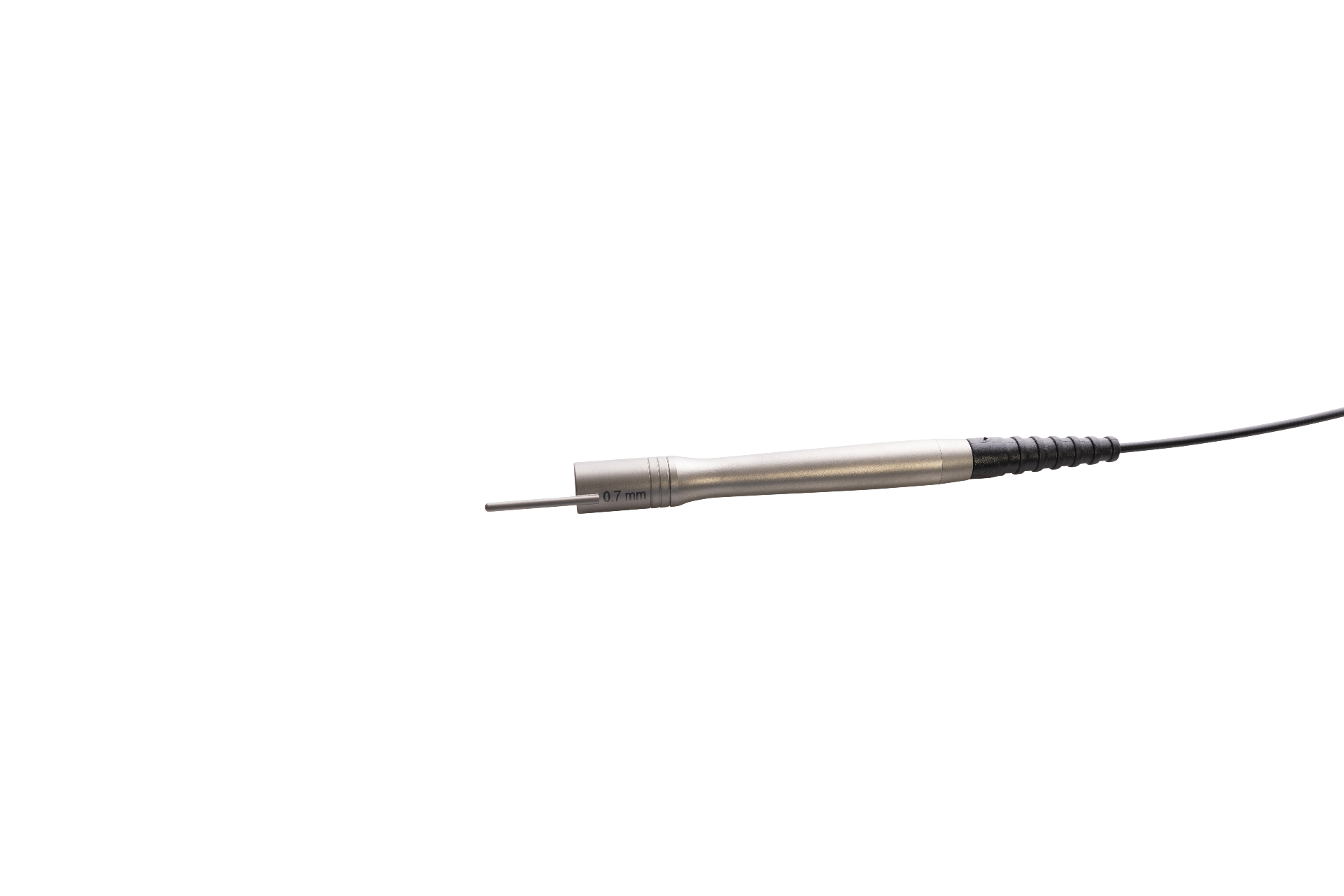
Cherry angiomas: VascuPen and ClearVas Because cherry angiomas are made of blood vessels, we use lasers that target haemoglobin. VascuPen is a precise 520 nm green diode laser designed for fine vascular work, ideal for small angiomas. ClearVas, a long-pulsed 1064 nm Nd:YAG laser, penetrates more deeply and can be useful for larger or thicker lesions.
A study directly comparing a 532 nm green laser with a 1064 nm Nd:YAG laser for cherry angiomas found both were effective. The 1064 nm laser needed fewer sessions but caused more redness, swelling, pain and scarring, while the green laser was gentler but slightly more likely to leave temporary darkening; the authors suggested 1064 nm may be preferable for darker skin. Having both options means we can match the treatment to your skin and the lesion.
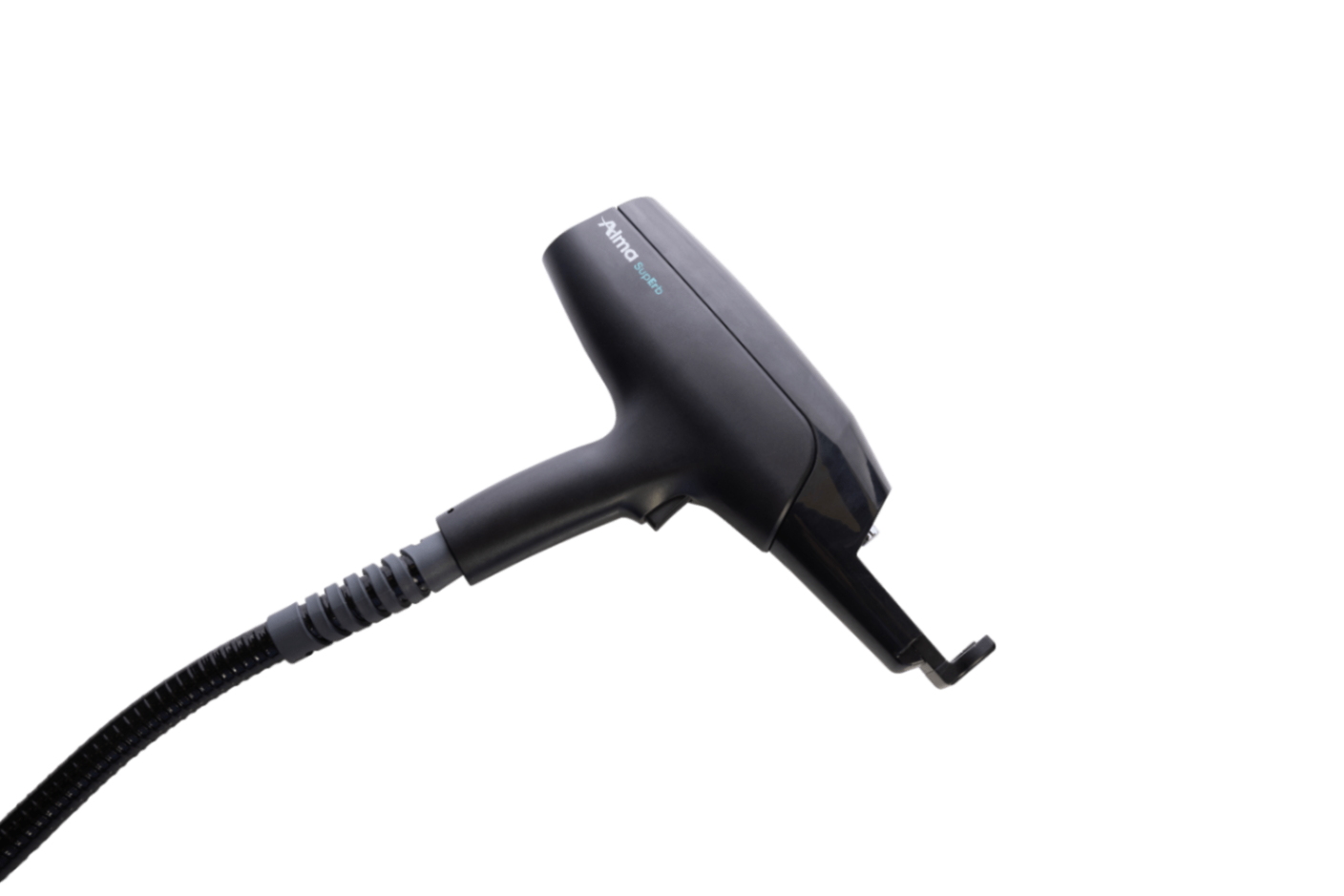
Skin tags and seborrhoeic keratoses: Superb 2940 The Superb 2940 is an Er:YAG laser. Its wavelength is very strongly absorbed by water in the skin, allowing us to remove thin layers of tissue with precision and relatively little heat spread to the surrounding skin. This makes it well suited to raised lesions like seborrhoeic keratoses and skin tags.
The evidence supports this approach. In a split-face study of seborrhoeic keratoses on the face, erbium laser achieved complete clearance in 80% of cases compared with 58% for a chemical (70% trichloroacetic acid) treatment, needed fewer sessions, and caused less pigmentation (8% versus 24%). In a single-centre series spanning 25 years, 735 seborrhoeic keratoses were treated with erbium laser, with a reported patient satisfaction rate of 98.8%.
What to expect
Consultation: a careful look at each lesion, your medical history, and a clear plan. We will always tell you if a lesion should be seen by your GP first.
Comfort: small lesions are usually quick to treat, and we will talk you through options to keep you comfortable.
Healing: treated cherry angiomas may darken or form a tiny scab before fading. Areas treated with Superb 2940 form a small scab while the skin heals underneath; in the seborrhoeic keratosis study above, downtime averaged around 10 days.
Aftercare: keep the area clean, avoid picking, and protect it from the sun to reduce the risk of pigment change.
More than one session is sometimes needed, particularly for larger lesions.
New lesions can still develop over time, as the tendency to form them is linked to age and genetics.
Why choose a medical clinic for lesion removal?
Over-the-counter freezing kits, "removal pens" and non-medical providers may seem convenient, but they skip the most important step: making sure the lesion is safe to remove. At DG Medical Aesthetics and Skin, we are a CQC-registered, nurse-led clinic. We combine careful clinical assessment with precise laser technology, in a discreet and relaxed setting.
If you have lesions that bother you, book a consultation and let's take a proper look.
This article is for general information and does not replace a personal consultation. Results vary between individuals.