
Pigmentation and Melasma: What Laser Can (and Can't) Do for Uneven Skin Tone
Few skin concerns are as frustrating as pigmentation. Sun spots that seem to appear overnight, patches of darker skin across the cheeks or upper lip, marks left behind after a spot has healed: they can make skin look older and more tired than you feel, and they are notoriously stubborn.
The good news is that modern laser and light technology gives us real, evidence-based options. The important news is that not all pigmentation is the same, and treating it well starts with knowing exactly what you are dealing with.
Not all brown marks are equal
Pigmentation is caused by melanin, the pigment made by cells called melanocytes. What differs between types is why the melanin is there and how deep it sits.
Sun spots (solar lentigines) are flat, well-defined brown marks caused by cumulative sun exposure. They sit mainly in the upper layer of the skin and usually respond well to treatment.
Post-inflammatory hyperpigmentation (PIH) is darkening left behind after inflammation, such as acne, a graze or an irritating product. It is more common and longer-lasting in deeper skin tones.
Melasma is different. It typically appears as symmetrical, blotchy patches on the cheeks, forehead, upper lip or chin, and is influenced by hormones, sunlight, visible light and genetics. It is a chronic, relapsing condition, which means it can be improved and controlled, but it tends to return if triggers are not managed.
This distinction matters because a treatment that works beautifully for a sun spot can, if used carelessly, make melasma worse.
How laser targets pigment
Lasers work on a principle called selective photothermolysis, first described by Anderson and Parrish in 1983. Each target in the skin, such as melanin, haemoglobin or water, absorbs particular wavelengths of light. By choosing the right wavelength, energy and pulse duration, we can deliver energy to the target while limiting heat to the surrounding skin.
The technology we use: Alma Harmony
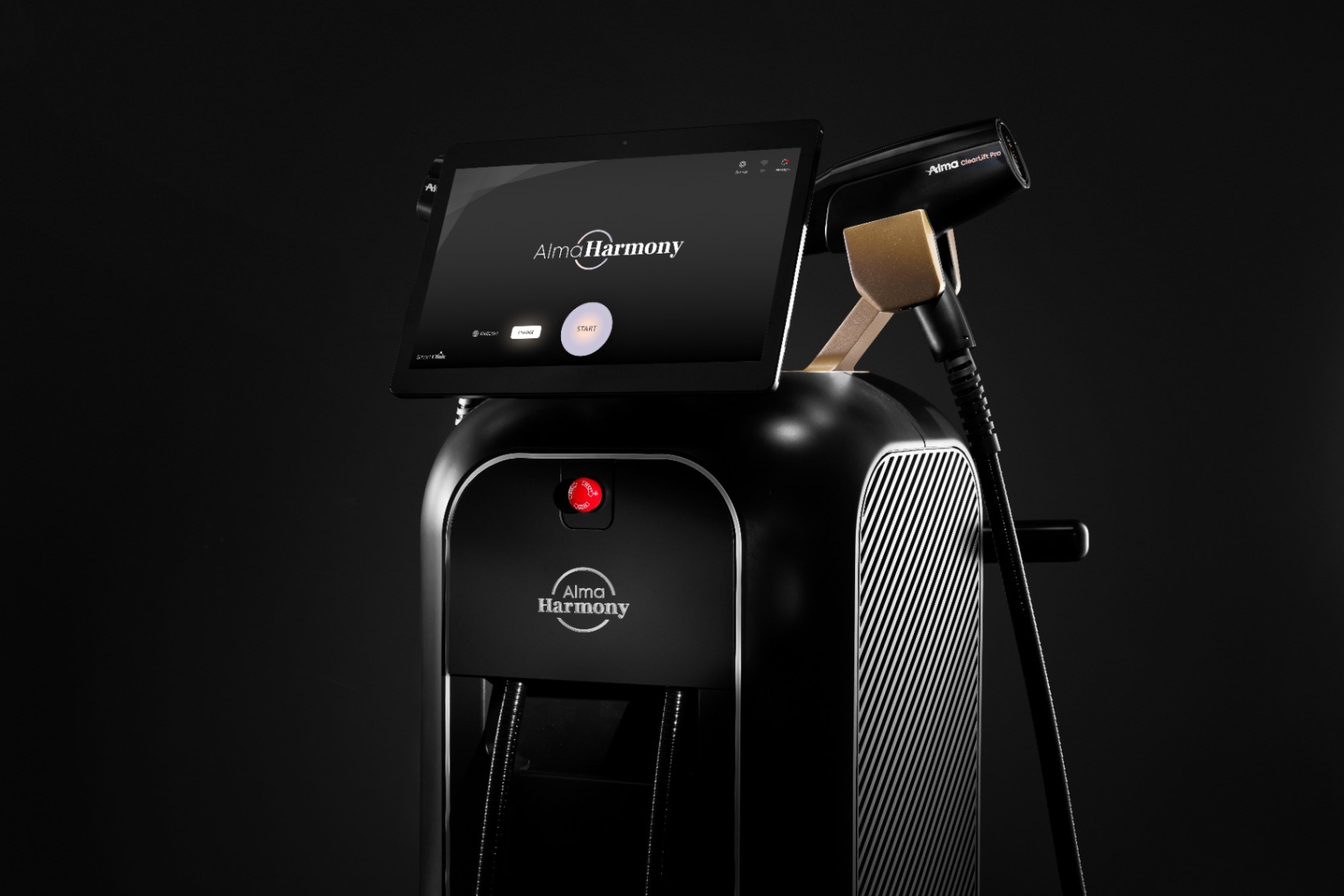
Our clinic uses the latest Alma Harmony platform, a multi-application workstation that combines several lasers and intense pulsed light (IPL) applicators in one system. For pigmentation, the two we reach for most are:
ClearLift (Q-switched 1064 nm Nd:YAG) ClearLift delivers extremely short, nanosecond pulses of 1064 nm laser energy. The pulses are so brief that pigment is shattered by a rapid photoacoustic effect rather than slowly "cooked", which helps protect surrounding tissue. We use two tips:
CVD tip: a motorised, variable-diameter full beam, which lets us adjust the spot size to the area and deliver even, low-energy "toning" passes across the face.
5x5 tip: a fractional "pixel" tip that splits the beam into a grid of micro-spots, treating the skin in a pattern rather than as a solid block.
Dye-VL (narrow-band IPL, 500 to 600 nm) Dye-VL filters light into a narrow band that is absorbed by both melanin and haemoglobin. That makes it well suited to sun-damaged skin where brown spots and redness often sit side by side. In the US it is cleared for benign pigmented and vascular lesions in skin types I to V.
What does the research say?
We believe you deserve a balanced picture, so here is what the published evidence shows.
For melasma, laser is a helpful tool, but not a first-line cure. A large evidence-based review in the American Journal of Clinical Dermatology examined 113 studies involving nearly 7,000 people. It found that topical treatments remain the most effective and best-studied first-line options, and that laser and light devices had "mixed results", performing equal to or worse than topicals, with a higher risk of side effects.
Low-energy Q-switched 1064 nm "laser toning" can produce meaningful improvement. In a split-face trial of 22 patients, the laser-treated side combined with a topical lightening cream improved by an average of 75.9% on a melasma severity score, compared with 24% on the cream-only side. However, the same study is a useful reminder of the limits: all patients experienced recurrence during follow-up, four developed rebound darkening, and three developed patches of lighter skin.
The takeaway: laser works best for melasma as part of a plan that includes daily broad-spectrum sun protection, medical-grade skincare and realistic maintenance, not as a one-off fix. Anyone promising permanent melasma removal is not reflecting the evidence.
For sun spots, which are more superficial and not driven by the same hormonal triggers, results are often more predictable, and fewer sessions may be needed.
Why a medical setting matters for pigmentation
Pigmentation is where the skill of the practitioner matters most, for three reasons.
Diagnosis comes first. Not every brown mark is harmless. As nurses, we are trained to assess skin and to recognise when a mark needs a GP or dermatologist's opinion before anything cosmetic is considered.
Heat and pigment are a delicate balance. Too much energy can trigger post-inflammatory hyperpigmentation or rebound melasma, particularly in medium to deeper skin tones. We assess your skin type carefully and adjust settings conservatively.
We look beneath the surface. Every consultation includes an analysis with our OBSERV 520x skin imaging system, which helps us see pigment that is not yet obvious to the naked eye and track your progress objectively over time.
What to expect
Consultation: face to face, with skin analysis, medical history and a discussion of what is realistic for your skin.
Preparation: consistent daily SPF and, where appropriate, a skincare programme to prepare the skin before laser.
Treatment: most people describe ClearLift as a warm, prickly sensation. Mild redness usually settles within hours. Sun spots treated with Dye-VL often darken slightly before flaking away over the following days.
A course, not a single session: pigmentation, and melasma especially, usually needs a series of treatments spaced a few weeks apart, followed by maintenance.
Ready to find out what is behind your pigmentation?
At DG Medical Aesthetics and Skin, we are a CQC-registered, nurse-led clinic. We treat the whole face and the whole person, in a calm and discreet setting. If uneven skin tone is knocking your confidence, book a consultation and we will explain exactly what is causing it and what can realistically be achieved.
This article is for general information and does not replace a personal consultation. Results vary between individuals.